
An unbelievable amount of wealth has been accumulated by humans. To accomplish such a feat, we ravaged, raped, pillaged, plundered, fought, killed, and harmed whatever stood in our way — nature, people, laws, and God. The pursuit of wealth is more sacred to humanity than anything else. It is the dream. It is freedom in its purest form — our highest purpose in life — because it promises to liberate us from our suffering and sacrifices.
That is quite a promise. A promise that drove countless revolutions, starting with the first Agricultural Revolution — the Neolithic Revolution (10,000 BC) — which enabled humans to transition from hunting and gathering to an agricultural way of life. We secured food through the domestication of plants and animals. We were supposed to live happily ever after.
The Urban Revolution (3,000 BC) led us from small communities into larger cities and states. It made us more efficient through bureaucracy, written language, money, and taxation. Cities became centers of innovation. It also brought us slavery, inequality, and elites.
The Scientific Revolution (16th–17th century) brought us a better, scientific understanding of the natural world. Literacy skyrocketed, and humanity learned to see the world as its playground to discover. Science was driven not only by curiosity but by imperial dreams — through gunpowder and colonial expansion.
The Industrial Revolution, again, promised to liberate us — our hands this time. Coal and steam powered a new age in which output, speed, and profits increased while nature slowly suffocated.
Then came the Digital Revolution — liberation through automation! Information for everybody and equality through connection, while in reality it disconnected communities and replaced them with social networks.
And now, people cheer for the AI Revolution. Everything is going to change — for real this time. We will spend the rest of our lives by the pool, cocktail in hand. We will finally be free!
None of these revolutions brought us what they promised. Our improved efficiency grew our population more than our happiness, Our understanding of the world didn’t create an ounce more wisdom; it created distraction. All these revolutions were driven by the idea of a better future, but that future was for a select few. Most of us just fueled the growth.
Optimists will argue that we live longer, own iPhones, and have warm showers — which is all true, unless you were born in the Global South, like the majority of the world. Our lives have improved, for sure. We have more — more of everything. But was that the goal?
Humanity resembles a dog chasing a firetruck. We get all hyped up, bark loudly, and run like hell after it. We work hard, forget about everything else and try to accumulate more wealth — chasing that firetruck. But we never ask ourselves what to do with it once we have it.
What did we do with our colonial wealth, our industrial wealth, our internet wealth? Where is the promised freedom that lured us into these ventures? Are we now happier than ever before? Did this wealth really reward us with more than just more people? And if population growth is the main consequence of accumulated wealth, do we really want more? Are we in a rat race to get onto a sinking ship? What do we actually want? Why are we running?
The world seems pretty messed up today, yet we (the EU, US and China) are putting all our eggs in this shiny, new AI-basket to chase the promise of liberation once more. I hoped we could consider, for once, what we will do when we actually catch that fire truck. AI is an impressive innovation and it does promise a lot of exciting new opportunities and scary new exploits, but is it worth the trillions that are being invested worldwide? Do we really want to bet the farm on it? Or will it send us back, again, to this boulevard of broken promises.
I have nothing against AI — or maybe I do. But it doesn’t matter. As a naturalist who looks at nature and life with astonishing awe and wonder, it seems to me that we already have something far more intelligent that is being economically ignored. My wife just built a human being in her belly. To do this, there were no extra emissions. There was no waste. There were no resources needed other than food and water. No extra garage or factory. No supply chain. No electricity. No engineers or laborers. Yet this little nugget of ours can become an artist, a president, a good mum, a terrible cook or all of the above. Endless potential. And so far, she’s growing only on her mother’s milk — milk her mother can transform out of any meal she eats. There is no Tesla factory or AI model that comes close to the ingenuity and efficiency of childbirth. And nature is full of such miraculous examples.
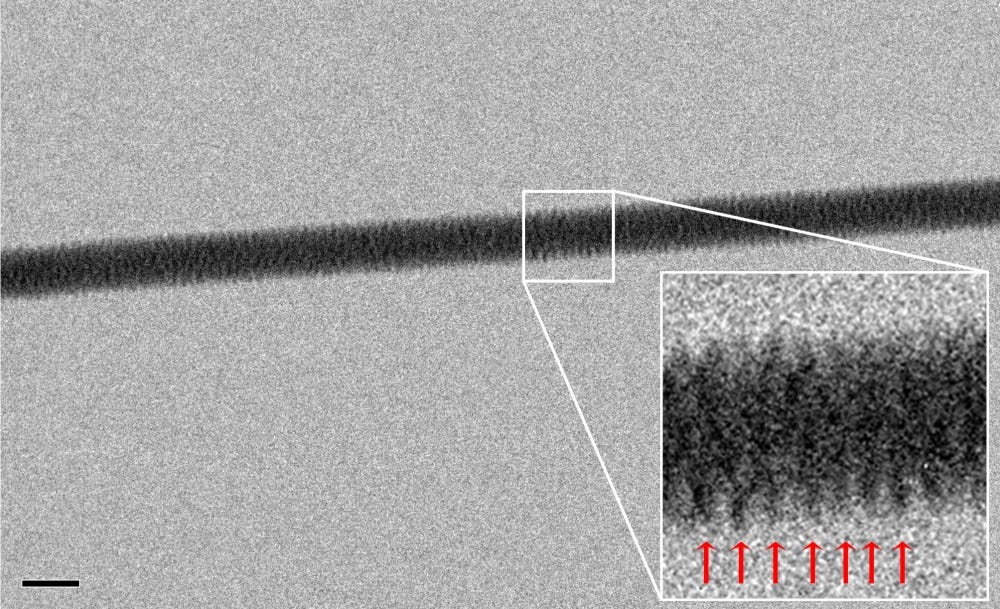
We have grown our population to more than eight billion human beings. The walls, floor, and ceiling of our house are cracking as we still try to accumulate more of everything for everyone at every moment. It is as good a moment as any to ask ourselves what we actually want to achieve, as a person, as a community, as a species. Is it 10 billion human beings with AI-powered phones and cars? Will AI tell us what we actually want and how we could actually be happy? Is that the trillion-euro question?
The miracle in front of our eyes is too often ignored. We are eight billion people, each a magnitude smarter than all AI combined, yet almost all its potential is wasted. We don’t need more data centers, we need better schools. Kids are being raised by iPads. Mums and dads need to go back to work a few weeks after birth. Almost all children get too little attention from their parents and every public school in the world is horribly underfunded. We are not giving our children what they deserve — a solid foundation that helps them build curiosity, empathy, joy and opportunity.

As the next revolution is presenting itself and the spoils will be shared amongst a select group of billionaires, while leaving more and more people behind, I can’t help but wonder about Elon Musk’s concerns regarding depopulation. Why can’t we improve the quality of human life rather than the quantity of living humans? Musk has around fifteen children. How many of them get their dad to read them a story before bed? How many hugs do they get while he builds another rocket? I have a lot of respect for Elon Musk and what he has achieved and what he is capable of, but he is also a dad that can’t be there for his children. If our population would shrink, but the quality of our upbringing improves significantly, would that make us more or less productive? More or less happy? More or less at peace? If we don’t invest everything we have in our children, why are we chasing that fire truck at all? What is our future worth without happy and healthy kids?
I wish all human beings had had a fantastic youth, loving and available parents, inspiring teachers and endless laughter and joy. The truth is far from it. There is this thing about life that people do not see. Life never stops. It didn’t start at birth and it didn’t end at death. Life is a continuous energy that is given to a child by their parents, driven by love. And if that wasn’t beautiful enough, it never stopped and never will. Your parents had parents and so on, until the very first living cell that somehow appeared on this planet, billions of years ago. It never ceased. Why is life itself not the biggest joy, the highest goal and the most cherished pastime?
Our children are our legacy. Our children are our future. If we would put all our accumulated wealth into raising them to the best of our abilities, I am pretty sure nature would thrive again, criminality would disappear alongside wars, fights, abuse and suppression. We would solve addiction, stress, burn-outs and apathy. We would have less children, but raise them significantly better. We would have communities again — spending more time together and less on screens.
Before we bankroll our next revolution and find ourselves again in another bubble of broken promises, maybe we should imagine what the world could look like if every human being was raised to their full potential. Isn’t that the real dream — not endless growth, but fulfilled lives? We have the wealth, the tools, and the knowledge. What we lack is the will to use them where they matter most.
If we invested every surplus of energy, time, and money into our children — into care, wisdom, and community — we might finally build a future worth chasing.
Maybe the next revolution isn’t technological at all.
Maybe it’s learning, at last, to raise ourselves.